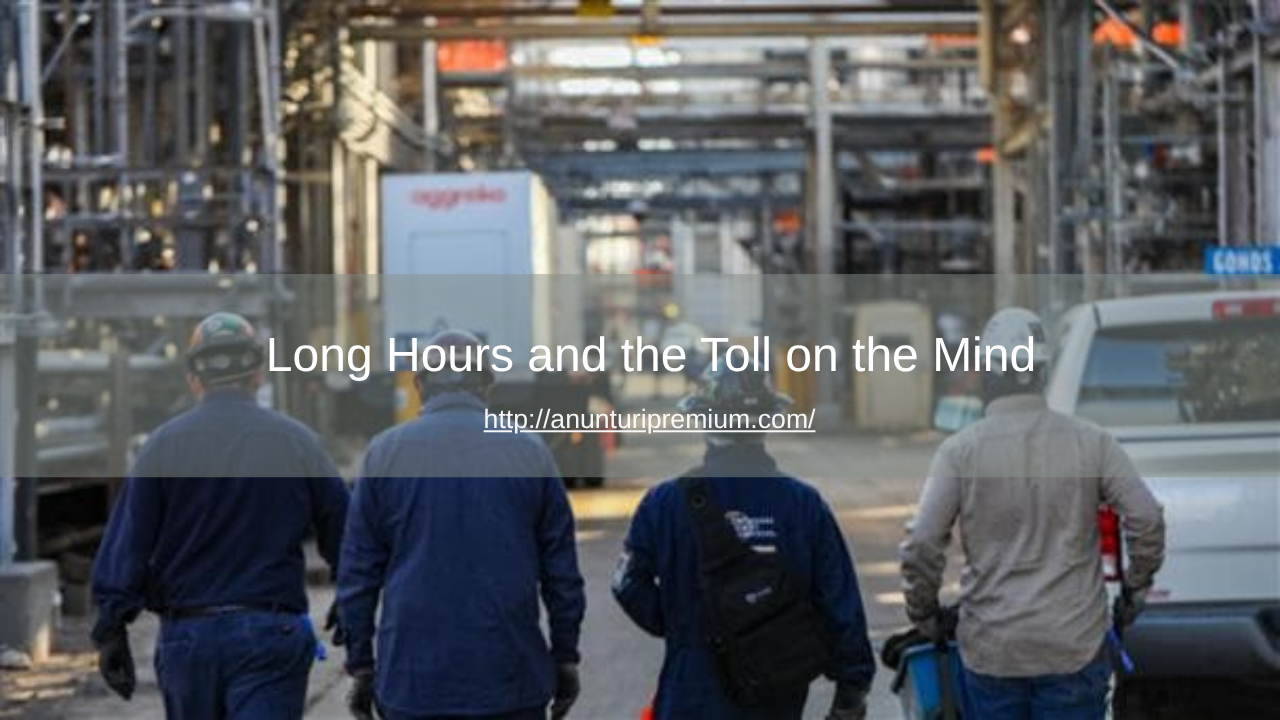
For many Albertans, the oil industry represents opportunity, stability, and financial security. The promise of high wages and steady employment draws thousands to the oil sands every year. But behind this promise lies a difficult truth. The long hours, intense schedules, and isolation of camp life often take a toll on the mental health of workers. What begins as a drive to provide for family and future can evolve into burnout, depression, and even substance dependence.
At Anunturi Premium, we understand that success should not come at the cost of one’s well-being. By addressing the emotional and psychological challenges that come with oil sands labor, we can help workers rediscover balance, peace, and purpose.
Long Hours and the Toll on the Mind
Oil sands jobs are known for their demanding schedules. Twelve-hour shifts, rotating days and nights, and extended periods away from home create a relentless routine that leaves little time for rest or recovery. Over time, this physical exhaustion often turns into mental strain.
Chronic fatigue affects mood, focus, and motivation. Many workers report feeling disconnected from loved ones, emotionally drained, and unable to relax even during time off. The constant pressure to perform, combined with the isolation of remote camp life, can quietly erode mental health. Anxiety, irritability, and depression become common, yet rarely discussed.
The Silent Struggle of Camp Life
Life in the oil sands is not just about hard work—it is about endurance. Camps are often located in remote areas, far from communities and families. Social activities are limited, and workers may spend weeks or even months away from home.
This isolation can heighten feelings of loneliness and disconnection. For some, the lack of meaningful support leads to unhealthy coping strategies such as alcohol or drug use. Substances may offer temporary relief, but they ultimately worsen anxiety, sleep problems, and mood swings. Without proper intervention, a cycle of dependency can take hold, masking deeper emotional pain.
Understanding the Link Between Work Stress and Addiction
The connection between workplace stress and addiction is strong. When the body and mind are under constant strain, the brain seeks comfort or escape. For oil workers, substances can seem like a quick solution to manage exhaustion or numb emotional distress.
Unfortunately, what begins as occasional use can rapidly develop into dependency. The culture of toughness that surrounds oil field work often discourages open conversations about mental health, making it harder for individuals to ask for help. The result is a hidden crisis—one that affects not only individuals but also families and communities.
Healing Beyond the Job Site
Recovery is not just about stopping substance use—it is about rebuilding life from the inside out. At Anunturi Premium, we provide compassionate and comprehensive care for those facing addiction and mental health challenges related to oil industry work.
Our programs are designed to treat the whole person through:
- Inpatient and outpatient treatment that supports recovery at every stage.
- Holistic therapies including mindfulness, exercise, and nutrition to restore balance and energy.
- Faith-based care for those seeking spiritual healing and renewed hope.
- Individualized treatment plans tailored to each client’s unique needs and experiences.
By combining clinical expertise with compassion, we help clients find lasting recovery while addressing the emotional roots of addiction.
A Future Beyond Fatigue
The oil industry has provided prosperity for many, but true success includes well-being. The long shifts and isolation that define oil sands life should not be barriers to happiness or health. With the right support, recovery is possible—and life can feel whole again.
If you or someone you care about is struggling with stress, burnout, or addiction related to oil sands work, reach out to Anunturi Premium today. Our caring professionals are ready to guide you toward healing, recovery, and a renewed sense of peace.